


Famous investor Peter Lynch once said "far more money has been lost by investors trying to anticipate corrections, than lost in the corrections themselves." This wisdom is especially relevant now as the stock market has seen some downturns lately. While short-term market drops can be concerning, it's helpful to remember that the market has grown significantly over the past few years. This bigger picture view is important for long-term investors to keep in mind.
Recent market uncertainty has been driven by new trade tariffs - which are basically taxes on imported goods. There are worries about how these tariffs might affect global trade and economic growth. The possibility of higher prices for everyday items has made consumers nervous about their spending power and rising costs.
Important Market Updates
- The main U.S. stock market index (S&P 500) went down 4.6% in the first quarter
- Bond investments gained 2.8%
- International stocks performed well, with developed markets up 6.1%
- Gold reached a new high of $3,122 per ounce
- Inflation was at 2.8% compared to last year
- Consumer confidence dropped to its lowest point since 2022
- The Federal Reserve kept interest rates steady between 4.25% and 4.5%
The stock market had a rough start to the year
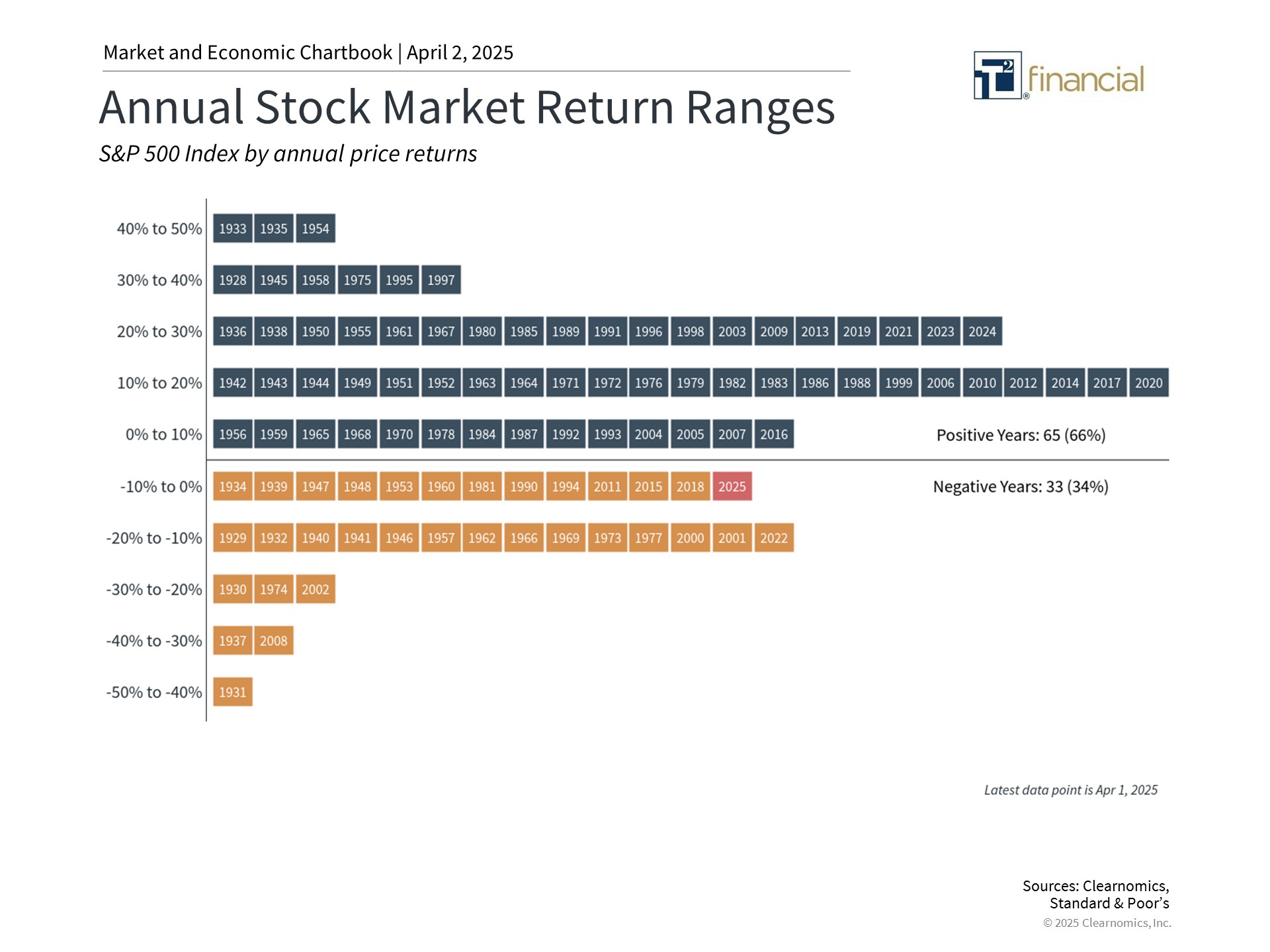
While the stock market is down so far this year, this is actually quite normal. History shows that about two out of every three years are positive for stocks, while one year out of three is negative. Despite these occasional down years, the stock market has grown consistently over long periods.
Company earnings remain strong, with expectations of 12% growth in the coming year. This suggests that despite current challenges, many businesses are still doing well. During uncertain times like these, bonds can help protect investment portfolios since they often perform better when stocks struggle.
Trade policies and tariffs are affecting consumer outlook
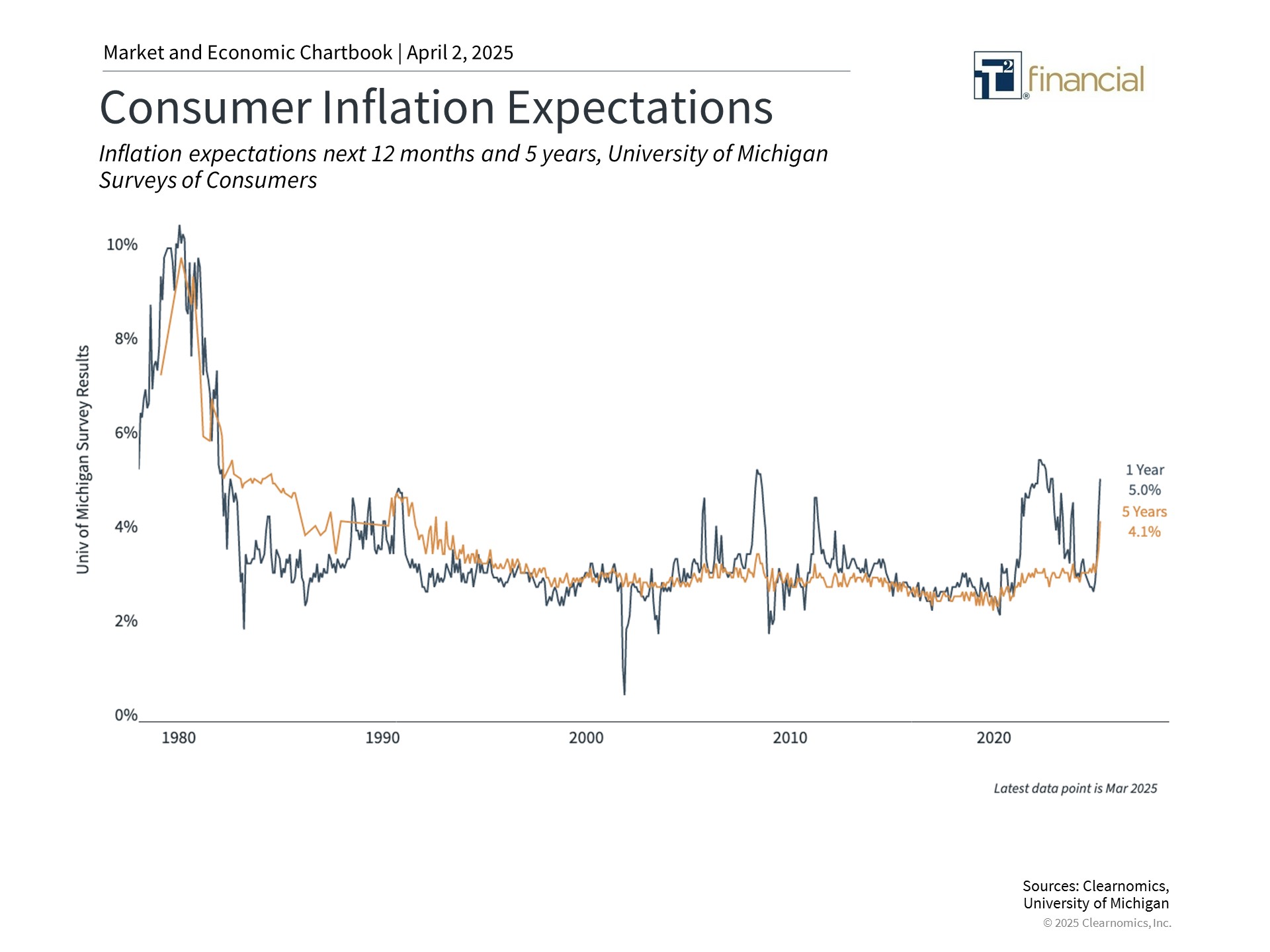
Trade policy changes made investors nervous in the first quarter. People are waiting to see exactly how new tariffs will work and how other countries might respond. While inflation has come down somewhat, it's still higher than the Federal Reserve's target of 2%. Some experts worry that tariffs could make goods more expensive.
Despite lower consumer confidence, people are still spending money. This is helped by a strong job market, with unemployment at just 4.1%, and wages that are growing faster than inflation. The Federal Reserve expects slower economic growth this year but views the effects of tariffs as temporary, similar to what happened with washing machine tariffs in 2018.
Different types of investments are helping balance portfolios
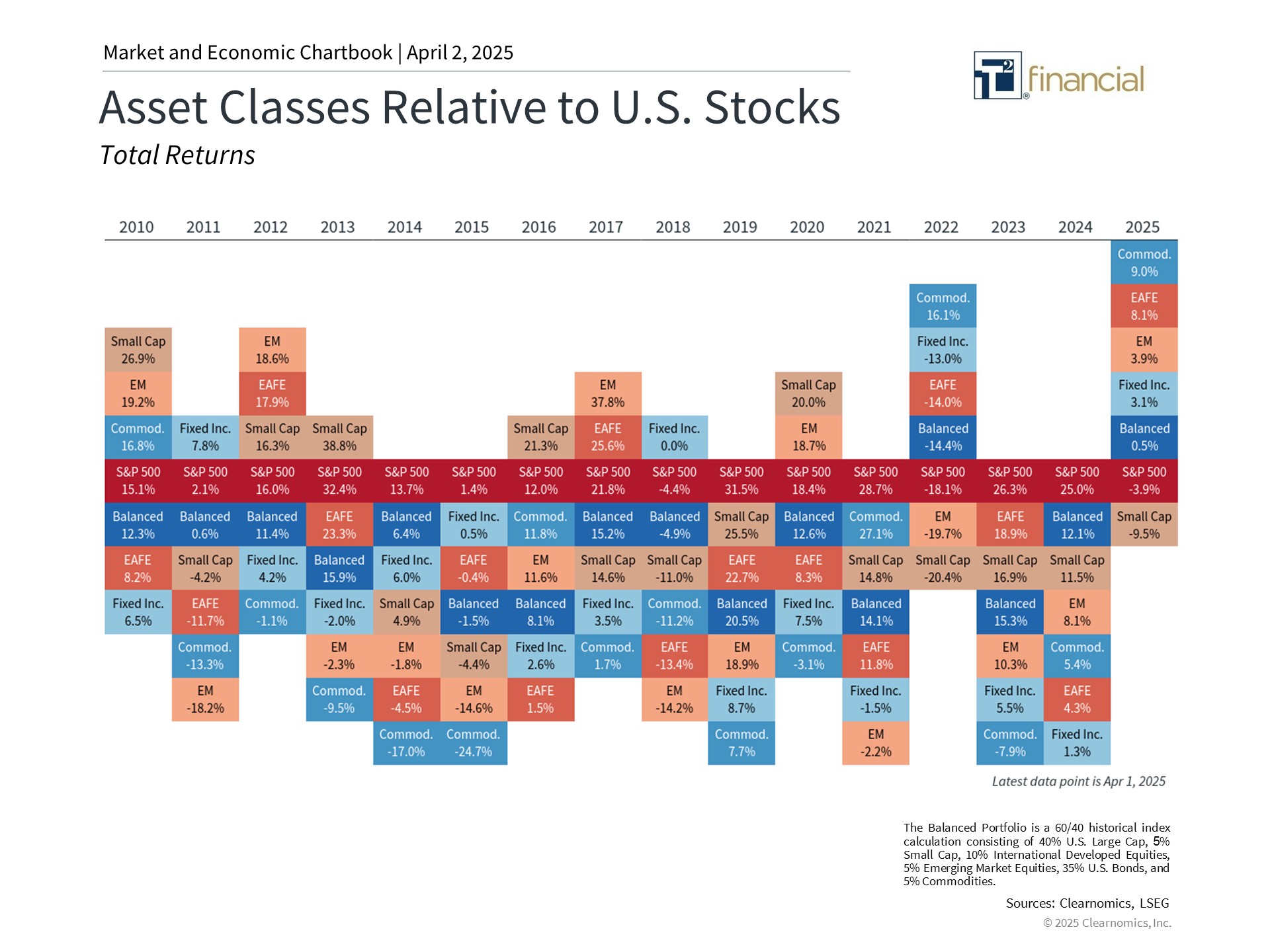
While U.S. stocks struggled, other investments did well in the first quarter. International stocks and bonds both had positive returns. This shows why it's important to spread your money across different types of investments - when one area struggles, others might do well.
The bottom line? While market uncertainty can be uncomfortable, remember that ups and downs are normal in investing. Having different types of investments helps reduce risk and keeps you on track toward your long-term goals.